What's the best flooring for Lakeway's crazy weather swings?
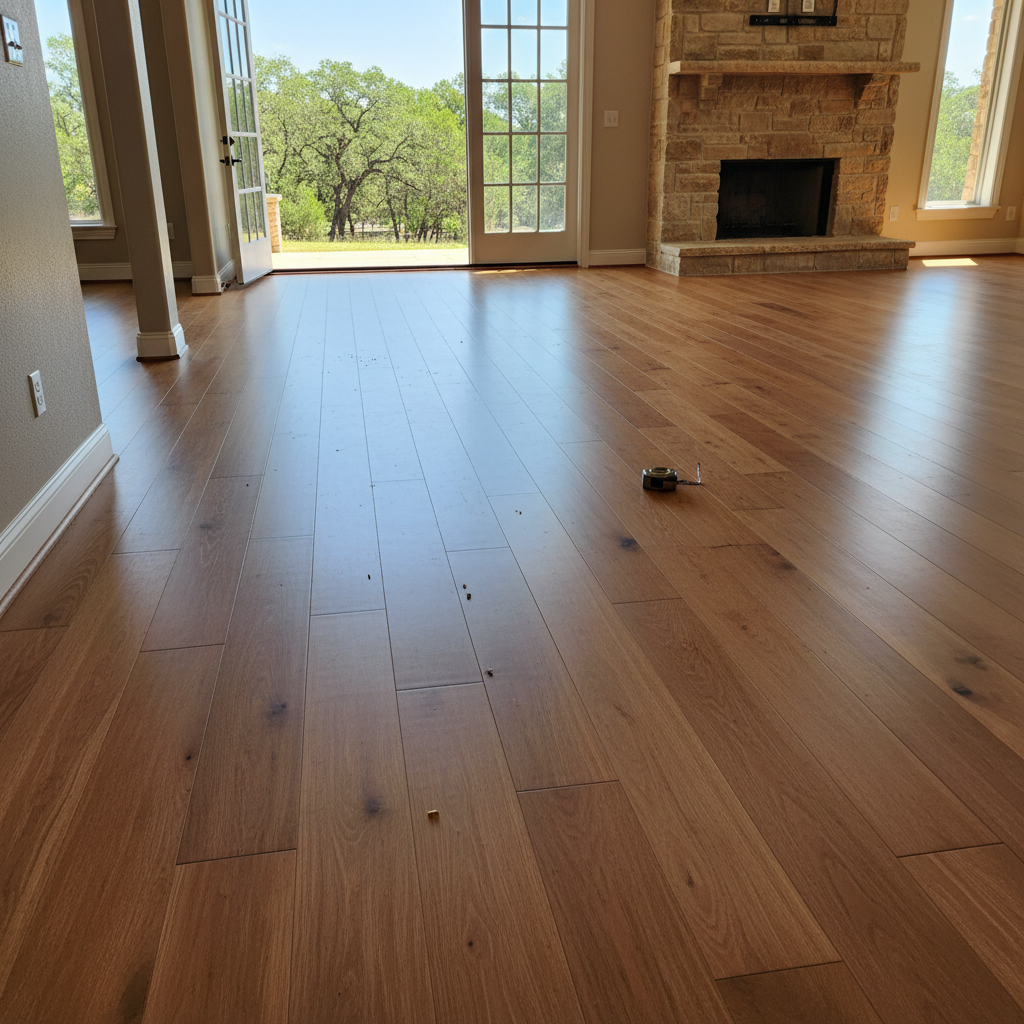
This is probably the most common question I get. Look, our weather here in Lakeway, especially out near Lake Travis, can be brutal. We get those scorching summers, then sudden cold snaps, and humidity that’ll make your hair curl. This means you need materials that can handle expansion and contraction without cupping, gapping, or warping. For wood, engineered hardwood is almost always a better bet than solid hardwood in our climate. It’s built with cross-ply layers that make it much more stable against moisture and temperature changes. If you’re set on a wood look but want maximum durability, luxury vinyl plank (LVP) or luxury vinyl tile (LVT) are fantastic. They’re completely waterproof, incredibly tough, and they look really good these days. Tile, of course, is always a solid choice for durability and moisture resistance, especially in high-traffic areas or homes with pets.
How long does a flooring installation really take?
That depends a lot on the size of the area, the type of flooring, and how much prep work is needed. A simple LVP install in a couple of rooms where the subfloor is already level might only take a day or two. If you’re talking about tearing out old tile, leveling a concrete slab (which is often needed in some of the older homes in areas like Flintrock Falls where foundations can settle unevenly), and then installing new engineered wood throughout a whole house, you could be looking at a week or more. I always tell folks to budget for the unexpected. We’ll give you a solid timeline upfront, but sometimes we uncover issues once the old flooring comes up that add a day here or there. Don’t rush it; a good install means taking the time to do it right, especially with acclimation periods for certain materials.
What's the deal with subfloor prep? Is it really that important?
Absolutely, it’s critical. Think of your subfloor as the foundation for your new flooring. If it’s not right, nothing else will be. We see it all the time: people try to cut corners, and then their new floors squeak, creak, or feel uneven. For wood or LVP, the subfloor needs to be clean, dry, and perfectly level. We’re talking within a certain tolerance, usually 1/8 inch over 10 feet. If it’s not, we’ll need to grind down high spots or fill in low spots with a self-leveling compound. For tile, it’s even more important to have a rigid, stable surface to prevent cracking. We might need to add an extra layer of plywood or a cement board. Don’t let anyone tell you they can just lay new flooring over a bad subfloor. It’s a recipe for disaster and will void most manufacturer warranties.
Can I install new flooring over my existing floors?
Sometimes, but not always, and it’s usually not my first recommendation. You can often install LVP directly over existing tile or even some types of hardwood, as long as the existing floor is flat, stable, and in good condition. However, you need to consider the added height. This can create issues with doors not clearing, transitions to other rooms, or appliances not fitting under countertops. Also, if the existing floor has any issues – like moisture problems or structural instability – putting new flooring over it just hides the problem, it doesn't fix it. For carpet, you always have to remove it and the padding. My rule of thumb is this: if you can remove the old stuff without too much hassle, do it. It gives you a cleaner slate and lets us inspect the subfloor properly.
How much does new flooring cost in Lakeway?
This is like asking how much a car costs – it varies wildly! You’ve got everything from budget-friendly laminates and entry-level LVP to high-end engineered hardwoods and custom tile work. Generally, you’re looking at a range of $3 to $15+ per square foot for materials alone, and then another $2 to $8+ per square foot for installation, depending on the complexity. Demolition and subfloor prep are extra. For a typical Lakeway home, a full house remodel with quality LVP might run you $8,000-$15,000, while engineered hardwood could easily be $15,000-$30,000+. These are just rough numbers, though. The best way to get an accurate estimate is to have us, All Star Remodeling Company, come out, take a look, and discuss your specific needs. We’ll break down the costs clearly so there are no surprises.
What kind of maintenance can I expect with different flooring types?
Maintenance is a big deal, especially if you have kids, pets, or just a busy household. Tile and LVP are probably the easiest – just regular sweeping or vacuuming and occasional mopping with a mild cleaner. They’re super forgiving. Engineered hardwood needs a bit more care. You’ll want to sweep or vacuum regularly and use a wood-specific cleaner. Avoid excessive water, and clean up spills quickly. Never use steam mops on wood. Carpet, of course, needs regular vacuuming and professional cleaning every 12-18 months, especially in high-traffic areas. Whatever you choose, understanding the maintenance upfront helps you pick something you can live with long-term. We’ll give you all the care instructions for your specific product once we’re done.