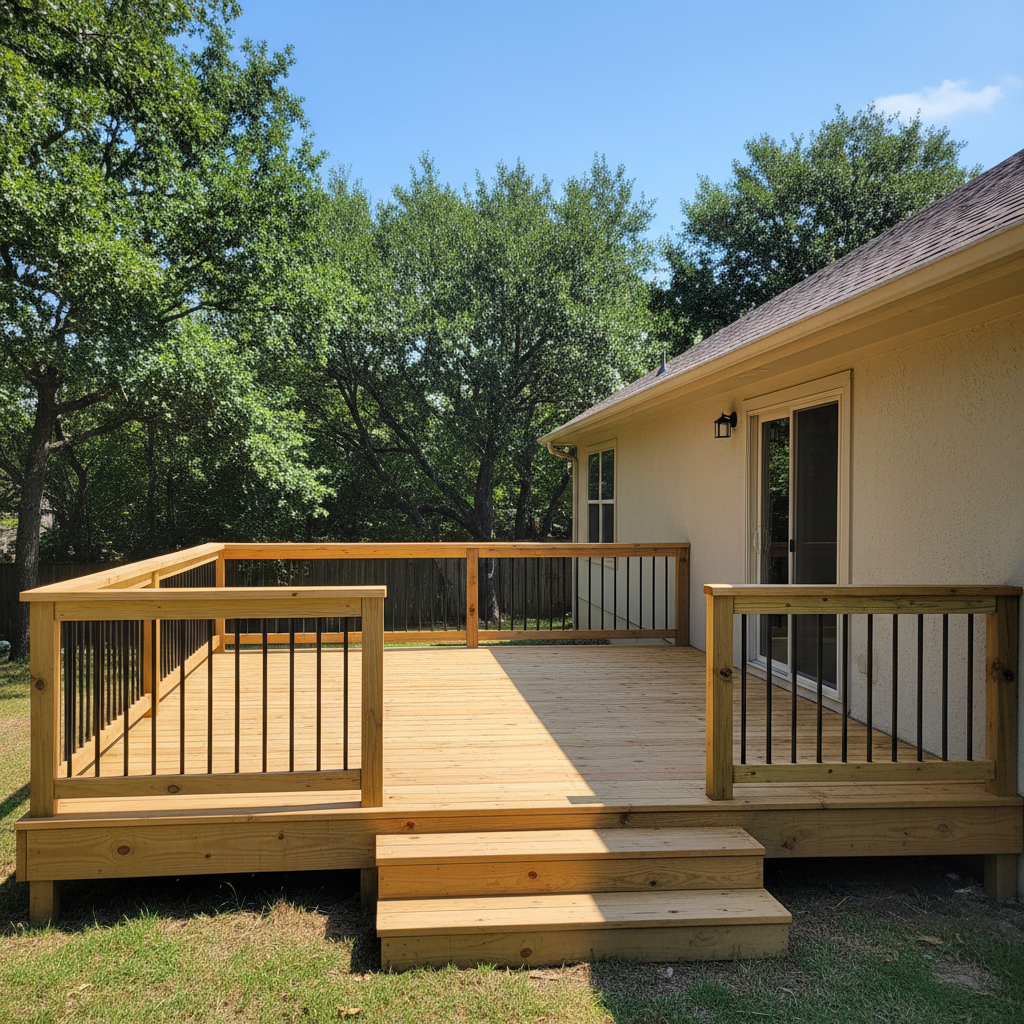
What Really Drives Deck Costs in Lakeway?
So, you're thinking about adding a deck to your Lakeway home, and the first thing that pops into everyone's head is, "How much will this set me back?" Totally fair question, and honestly, I hear it all the time. The real answer is, there's no single price tag because so many things can swing the final cost. It's not just about how big it is, though that's certainly a big piece of the puzzle.
From what I've seen, here's what impacts deck construction costs the most:
- Size and Complexity: This one's pretty straightforward, right? A small, simple rectangular deck is going to cost less than some sprawling, multi-level design with tricky angles or built-in features. If you want benches, planters, or a pergola integrated into the design, that means more labor and more materials.
- Materials: This is probably the biggest cost driver. Pressure-treated pine is your most budget-friendly choice. Cedar looks fantastic and lasts longer, but it costs more. Then you move up to composite decking (think Trex or Fiberon), which is super low-maintenance but has a higher price tag upfront. And hardwoods like ipe? They're absolutely gorgeous, but definitely a premium option.
- Site Conditions: Is your yard flat or does it slope? Building on a steep incline, which you see a lot in some of the older, more established neighborhoods around Lake Travis, needs more complex framing, deeper footings, and usually more labor. That really pushes up the price. Also, how easy is it to get to the build site? If we have to haul everything a long way, that just adds time.
- Permits and Inspections: Don't even think about skipping these. In Lakeway, most deck projects will require permits, and yes, there are fees involved. Inspections make sure your deck is built safely and up to code, which protects both your investment and your family. We always take care of this for our clients at All Star Remodeling Company, but it's still part of the overall cost.
- Features and Upgrades: Railings, stairs, lighting, built-in seating, privacy screens – these all add to the total. A basic pressure-treated railing, for instance, is way cheaper than a custom metal or cable railing system.
Typical Cost Ranges for Decks in Lakeway
Alright, let's get down to some actual numbers. Keep in mind, these are general ranges for Lakeway and the surrounding areas. Your specific project might land outside these, but they should give you a good ballpark idea.
- Basic Pressure-Treated Deck: For a simple, ground-level or low-elevation deck (let's say around 150-250 sq ft) using pressure-treated lumber, you're generally looking at $35 - $55 per square foot. So, a 200 sq ft deck could run you $7,000 to $11,000. This is your no-frills, solid, functional deck.
- Mid-Range Composite or Cedar Deck: If you're leaning towards composite decking for that easy maintenance, or a cedar deck for its natural beauty and durability, expect to pay $55 - $85 per square foot. A 200 sq ft deck in this range would typically be $11,000 to $17,000. These often come with a few more bells and whistles, like nicer railings or a couple of steps.
- High-End Custom Deck: For multi-level designs, premium composite or exotic hardwood materials, intricate railings (like glass or cable), built-in lighting, pergolas, or really complex foundations, the cost can start at $85 per square foot and easily climb to $120+ per square foot for truly custom work. A 200 sq ft deck could be $17,000 to $24,000+, but these projects are usually much bigger in scope anyway.
These prices generally cover materials, labor, and permit fees. They usually don't include things like landscaping around the deck, or any major grading work if your yard needs a complete overhaul.
What Should Be Included in Your Deck Quote?
When you get a quote from a contractor, make sure it's super detailed. A good quote should clearly lay out:
- Scope of Work: What exactly are they building? Think size, shape, height, how many stairs, what kind of railing, etc.
- Materials: Specific types of lumber (e.g., pressure-treated pine, cedar, the exact brand/line of composite), fasteners, concrete.
- Labor Costs: How many days or hours they expect the work to take.
- Permit Fees: Who's responsible for pulling them and the estimated cost.
- Site Preparation: Any demolition of existing structures, grading, or clearing that needs doing.
- Warranty: What kind of warranty they offer on their workmanship.
- Payment Schedule: Clear milestones for when payments are due.
- Insurance Information: Proof of their liability and worker's comp insurance.
If a quote is just a single number scrawled on a napkin, honestly, just walk away. You really need to know what you're paying for, don't you?
Avoiding Overpaying for Your Lakeway Deck
Nobody wants to feel like they got ripped off. Here's how to make sure you're getting a fair deal:
- Get Multiple Quotes: This is standard advice for a reason. Get at least three detailed quotes from reputable local contractors. It helps you compare apples to apples and really understand the market rate.
- Check References and Reviews: See what other Lakeway homeowners have to say about them. Look for consistent quality and good communication.
- Don't Always Go for the Lowest Bid: The cheapest quote often means someone's cutting corners, either on materials or workmanship. A deck is a structural addition to your home; you want it built right and safely.
- Understand the Materials: Do your homework on different decking materials. Know the pros and cons of composite versus wood, and what kind of maintenance commitment each one demands.
- Be Clear About Your Vision: The more specific you are with your contractor about what you want, the more accurate their quote will be. Changes mid-project almost always cost more.
Building a deck is a fantastic investment in your home and your lifestyle, especially here in Lakeway where outdoor living is such a big deal. Do your homework, ask the right questions, and you'll end up with a beautiful, functional space you'll enjoy for years.